Taormina – Beaches,Mountains, and NaturalSurroundings
· 3 min
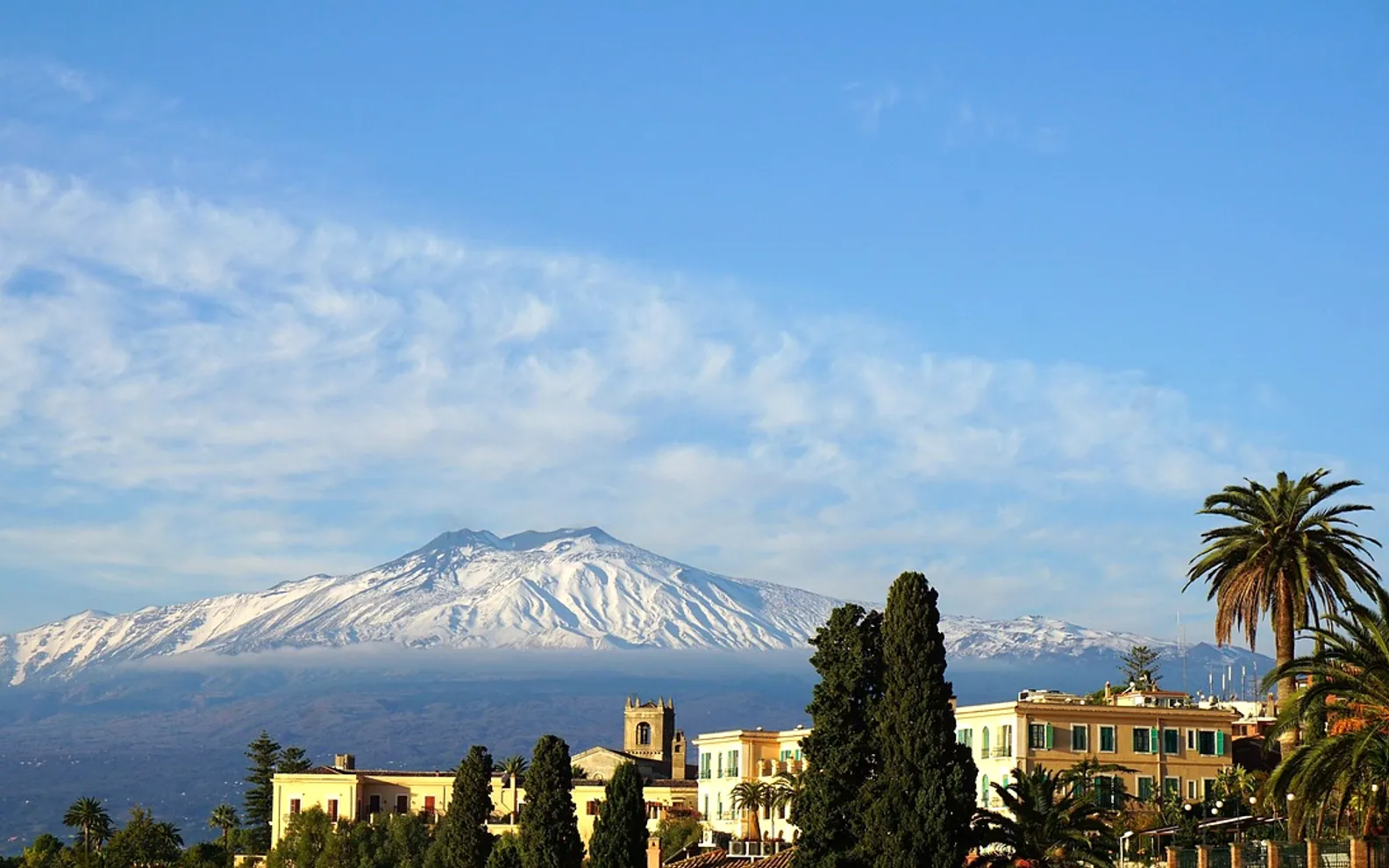
Most people arrive in Taormina for the ancient theatre and the lanes of the old town, then notice what frames every view: a bright sea on one side, a smoking volcano on the other, and terraced hills climbing in between. Treating that landscape as the main subject, rather than the backdrop, changes how a few days on Sicily's eastern coast feel.
Reading the coastline from above
The town sits on a ledge, so the shore is something you descend to. A short cable car links the upper streets with Mazzarò, a curved bay of smooth pebbles and clear, usually calm water. Loungers and parasols can be hired in summer, and small bars serve cold drinks, yet the bay is at its most pleasant early, when the water is glassy and the footpath along the rocks is nearly empty.
A little further along lies Isola Bella, a small rocky islet tethered to the shore by a thin strip of sand and shingle that comes and goes with the sea. It is a protected reserve, so visitors follow set routes and leave plants and marine life undisturbed. Snorkellers find plenty to watch in the shallows, and boat trips that follow the shore reveal grottoes and rock arches that are invisible from land.
Etna as a living classroom
From almost any terrace in Taormina, Mount Etna fills the southwest horizon. Visiting its flanks is a lesson in geology you can walk through: dark lava fields from different eruptions, pale lichen colonising the newest rock, and pine and chestnut woods on older soils lower down. Guided excursions reach the zones open to the public and explain how the volcano shapes the farms around it, which is why tastings of honey, wine and cheese from its slopes appear on many itineraries.
Conditions on the mountain shift quickly, and access to the upper areas depends on current activity, so a local guide is the sensible choice for anything beyond the marked visitor areas. Sturdy shoes, a warm layer and water make sense even in midsummer, because the air at altitude is much cooler than on the beach.
Paths, gorges and hilltop villages
Closer to town, the old mule tracks that once connected Taormina with surrounding hamlets now serve walkers. One popular climb leads up to Castelmola, a village perched even higher, where the view takes in the whole coast. Inland, the Alcantara valley offers a different scene: a river that has cut through basalt, leaving columns of dark stone and cold, fast water that is refreshing on a hot afternoon.
Anyone short on time can let a local outfit handle transport and timing; booking one of the Tours Taormina experiences is an easy way to combine the coast, the volcano and the villages without juggling bus schedules, and good guides add the stories behind each place.
Visiting lightly
- Travel in late spring or early autumn, when the sea is still warm and paths are cooler and quieter.
- Carry rubbish back from beaches and trails, and stay on marked routes inside the Isola Bella reserve.
- Use reef-friendly sun protection and avoid touching rocks covered in marine growth.
- Bring a refillable bottle; fountains and cafés are common in town.
- Buy local produce from small growers, which keeps the farmed terraces worth maintaining.
Taken slowly, Taormina offers a compact field trip through sea, rock and cultivated land, and each part makes the others easier to understand.



Tell us what you think.
We read every message.