How to TakeBetter Travel Photos
· 3 min
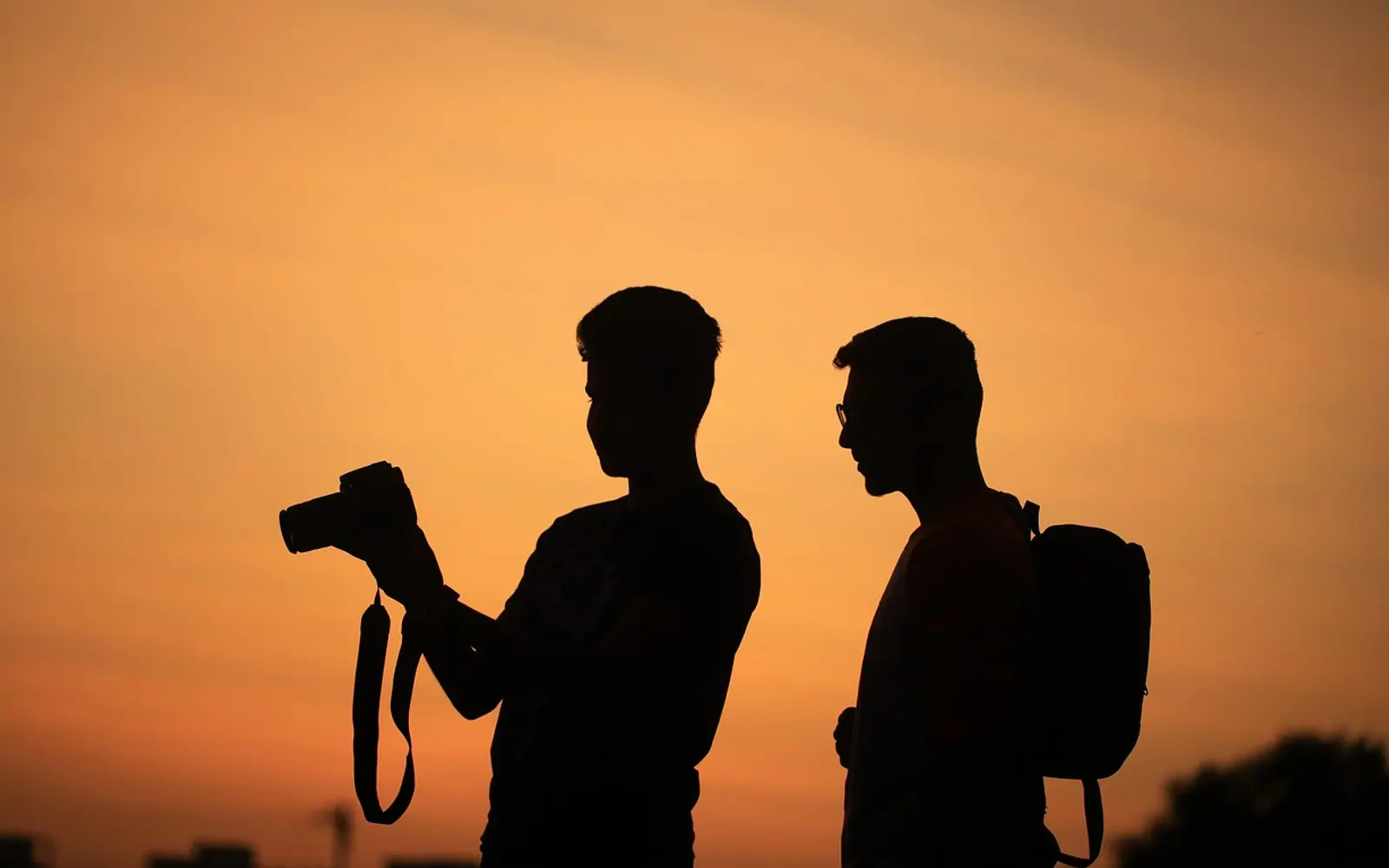
Most travel photos fall into the same pattern: the famous view, shot at midday, from the spot where everyone else is standing. They prove you were there, yet they rarely capture how the place felt. Better pictures do not require a new camera. They come from paying attention to light, simplifying what is in the frame and looking for the small stories that make a destination its own.
Follow the light
Light changes everything. The hour after sunrise and the hour before sunset bring warm, low light that shapes buildings and faces with soft shadows. Midday sun from overhead tends to flatten scenes and create harsh contrasts, so use that time for shaded streets, interiors, markets and museums.
- Overcast days suit portraits and forests, because the cloud acts as a giant diffuser.
- Blue hour, just after sunset, gives city lights a gentle balance with the sky.
- Side light reveals texture in stone, sand and old walls.
- Shooting into the light can produce glowing outlines, as long as you protect the lens from flare.
Simplify the frame
A cluttered image confuses the eye. Before pressing the shutter, ask what the photo is about, then remove anything that does not help. Step closer, change your angle or wait for a passer-by to move. Clean backgrounds, such as sky, a plain wall or water, make your subject stand out.
Composition habits worth practising
- Place the horizon on the upper or lower third rather than the exact middle.
- Use paths, rails and shorelines to lead the eye into the picture.
- Frame a scene through a doorway, arch or overhanging branch.
- Include something in the foreground to give a landscape depth.
- Keep vertical lines straight, especially with buildings.
Change your viewpoint
The postcard angle has been photographed countless times. Walk a little further, climb a few steps, crouch low or turn around to see what is behind you. Some of the most personal travel pictures are taken facing away from the landmark, showing the people watching it or the street that leads up to it.
Photograph people with respect
People bring life to travel images, but they deserve courtesy. Ask before taking close portraits; a smile and a gesture towards your camera usually work even without a shared language. Accept a refusal gracefully. Be especially careful with children, religious sites and moments of private grief, and follow local customs and any signs that restrict photography.
Tell a story with a set
Rather than one perfect shot, aim for a small series that describes a place. Mixing wide, medium and detailed pictures gives variety when you look back later.
| Shot | What it shows | Example |
|---|---|---|
| Wide | The setting | A harbour seen from the hillside |
| Medium | Activity and people | Fishermen sorting nets on the quay |
| Detail | Texture and character | Weathered paint on a boat's bow |
| Moment | Feeling | Gulls lifting off as a ferry departs |
Know your camera or phone
Spend an evening at home learning the basics: how to lock focus and exposure, switch on grid lines, use the timer and shoot in burst mode. Clean the lens often, since a smudged phone lens softens more pictures than any technical limit. On a camera, practise changing settings without looking, so you do not miss a passing moment.
Plan for good light
Great travel photos often result from being in the right place at the right hour. When drawing up your days, note where you would like to be at sunrise or sunset and fit the rest of the schedule around that. Our guide on how to make a travel itinerary shows how to leave room for those moments without exhausting your travel companions.
Places with dramatic natural settings reward this kind of planning. The coves and volcanic slopes described in our piece on Taormina and its surroundings look completely different at dawn and at noon.
Edit a small selection
Back home, resist sharing everything. Choose the strongest pictures from each day, straighten horizons, crop distractions and adjust brightness gently. Heavy filters date quickly, while modest edits keep the place recognisable. Back up your files in two places before deleting anything from the camera or phone.
Finally, put the camera away sometimes. Moments you simply watch become memories of their own, and returning to photography afterwards with rested eyes often leads to better pictures.



Tell us what you think.
We read every message.