How to TakeGood Notes
· 3 min
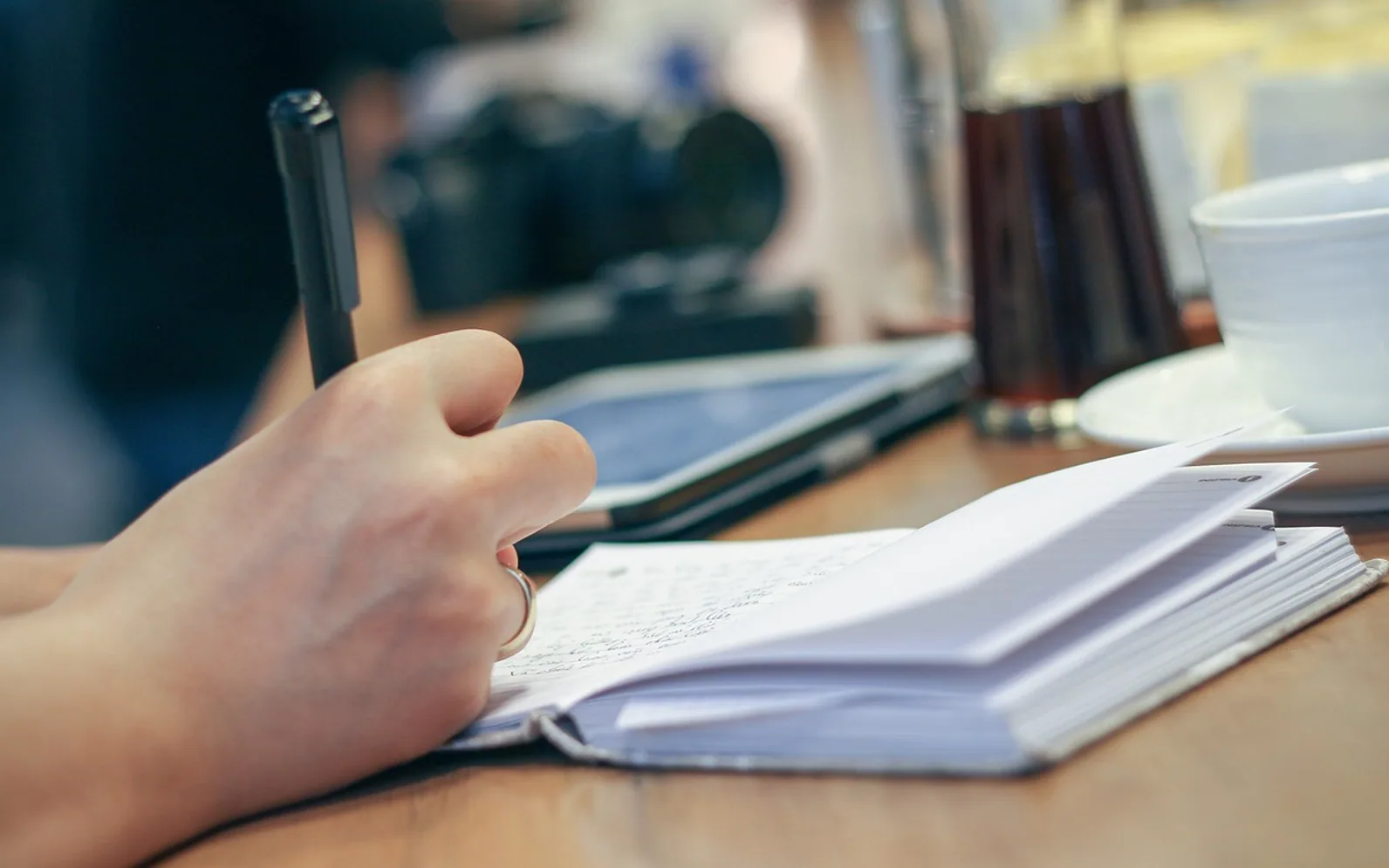
Notes have a strange reputation. Some people fill pages and never look at them again; others write nothing and trust their memory, which then lets them down a week later. Useful notes sit somewhere in between. They are a record of what you understood, organised so that future you can find it quickly and rebuild the idea.
Notes are thinking, not copying
The most common mistake is trying to capture everything. Writing word for word keeps your hand busy while your mind stays passive. When you have to decide what matters and phrase it in your own words, you are already processing the material, and that effort is what makes it stick.
Before a lecture, talk or documentary, spend a minute asking what you expect to learn. Write two or three questions at the top of the page. As the session runs, listen for answers, and note anything that surprises you or contradicts what you assumed.
Listen for the skeleton
Most talks and well-made films have a structure: an opening claim, several supporting parts and a conclusion. Speakers signal transitions with phrases like "the second reason" or "this brings us to". Catching those signposts lets you build headings as you go, which gives your page a shape rather than a wall of text.
- Mark main points with a heading or a box.
- Indent examples and details underneath the point they support.
- Use arrows to show cause and effect.
- Keep a margin for questions you want to follow up.
Layouts worth trying
No single method suits everyone or every subject. These four are popular because they each solve a particular problem.
| Method | How it works | Suits |
|---|---|---|
| Cornell layout | A narrow cue column, a wide notes column and a summary strip at the bottom | Lectures and revision |
| Outline | Nested bullet points with indents for detail | Well-structured talks and textbooks |
| Mind map | A central topic with branches for related ideas | Brainstorming and connected subjects |
| Sentence method | Each new fact on its own numbered line | Fast speakers and unpredictable discussions |
A closer look at the Cornell layout
Draw a vertical line about a third of the way across the page and leave a few lines free at the bottom. During the session, write in the wide right-hand column. Afterwards, add short questions or keywords on the left that point to each chunk of notes, then write a two-sentence summary at the foot. Covering the right side and answering the cues from memory is an easy self-test.
Paper or screen?
Both work. Handwriting is slower, which naturally pushes you to summarise instead of transcribe, and diagrams are quick to sketch. Typing is faster, searchable and easy to reorganise, though it tempts some people into copying everything verbatim. A practical compromise is to handwrite during the session and type a cleaner version afterwards, using the second pass as review.
Review within a day
Notes left untouched quickly become cryptic. Ideally the same evening, or the next morning at the latest, read through them and tidy up:
- Fill gaps while the session is still fresh in your mind.
- Rewrite unclear abbreviations in full.
- Highlight the handful of ideas that matter most.
- Answer the questions you wrote at the start, or mark them as still open.
- Write a short summary in plain language.
Then return briefly a few days later, and again after a couple of weeks. These short revisits do more for memory than one long session before an exam or a meeting.
Notes for books, films and languages
When reading, jot page numbers next to key ideas so you can find quotes later. For documentaries, pause at natural breaks and note the main argument of each section before moving on. Learners of a new language benefit from a separate page for phrases heard in context, which links nicely with the advice in how to learn a new language as an adult.
Keep a home for everything
A system you trust is one where you know where things live. Use one notebook or digital folder per subject, date every page, and keep an index on the first page or a pinned note. If you enjoy reflective writing too, our tips on making a good journal show how a personal notebook can sit alongside study notes without the two getting tangled.
Above all, judge your notes by one test: could you explain the topic to a friend using only what is on the page? If the answer is yes, they are doing their job.


Tell us what you think.
We read every message.